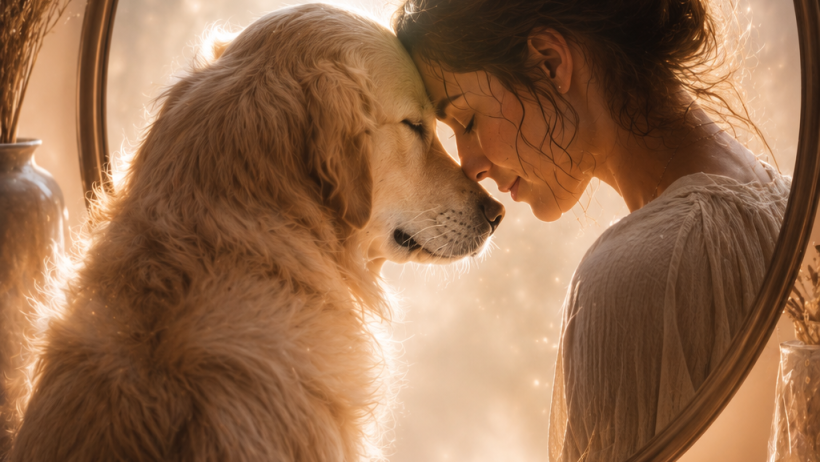
You’ll rarely hear me use the words pet or owner. Not because I’m being overly sensitive about language, but because the words we use shape how we see and relate to animals.
For generations, society has viewed animals through a lens of ownership. The word pet historically describes an animal kept for human enjoyment, amusement, or companionship — something owned, controlled, or managed. Even today, most definitions still center animals around their usefulness or value to humans.
But anyone who truly loves animals knows the truth:
Animals are not objects.
They are not possessions.
They are not “less than.”
They are living, feeling, conscious beings with intelligence, emotions, memories, and soul.
Words Carry Energy
Most people who lovingly refer to their animals as “pets” aren’t thinking in terms of ownership or hierarchy. Their hearts are in the right place. But language is powerful. The words we repeat reinforce beliefs — consciously or not.
When we label animals as property, it subtly reinforces the idea that humans are superior and animals exist to serve us.
When we shift our words, we shift our awareness.
Instead of pet, I prefer words like:
• Animal companion
• Animal friend
• Family member
Because that’s what they truly are — beings we share our lives with, not things we possess.
Why I Don’t Say “Owner”
Alongside avoiding the word pet, I also choose not to call people “owners.”
We don’t own our partners.
We don’t own our children.
And I don’t believe we own animals either.
Animals have their own inner world, personality, preferences, emotions, and spiritual path. We are not their masters — we are their guardians, caretakers, protectors, and friends.
So instead of owner, I use terms like:
• Their person
• Guardian
• Caretaker
• Human friend
Each of these reflects a relationship built on responsibility, trust, and respect — not control.
Animals Are Conscious Beings, Not Property
Animals feel deeply. They grieve. They form bonds. They understand energy. They communicate in their own unique way — emotionally, energetically, and spiritually.
When we move beyond the mindset of ownership, we begin to notice something profound:
Animals are not only companions.
They are also teachers.
They are healers.
They are guides.
They remind us to be present.
They show us unconditional love.
They help us reconnect to our intuition, our compassion, and our humanity.
A Shift in Awareness
Over the years, human consciousness around animals has evolved. More people now recognize animals as sentient beings with emotional intelligence, individuality, and spiritual depth. Many cultures and indigenous traditions have always understood this.
Changing language is part of honoring that awareness.
It’s not about policing words or shaming anyone. It’s about inviting a deeper perspective — one that honors animals as equal souls sharing Earth with us.
Moving Forward Together
We are incredibly fortunate to share our lives, homes, and hearts with animals. When we shift our language, our perception naturally shifts too. We begin relating to animals with greater reverence, empathy, and connection.
And when we acknowledge them as conscious beings — not property — our bond with them grows even richer.
They are not “pets.”
We are not “owners.”
We are companions, guardians, and partners on this journey of life together.